
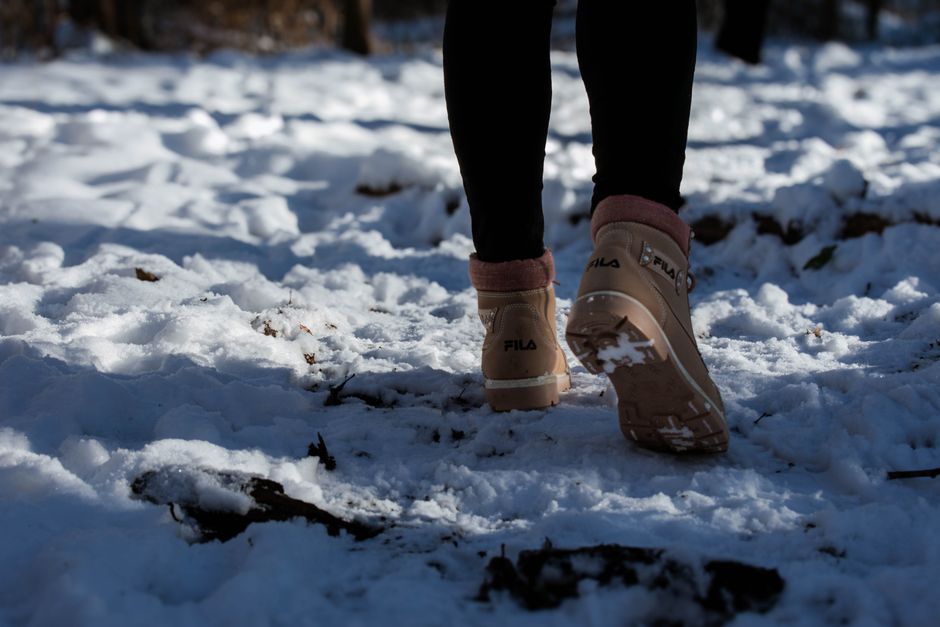
Warm socks should make winter boots more comfortable, but that only works when the boots have room for them. A pair that feels lovely with thin hosiery can become tight across the toes once you add a cushioned sock. Choosing Winter Boots With Space for Warm Socks starts with treating the boot and sock as a single fitting decision. You want space to move your toes, a heel that feels secure, and enough adjustment to keep everything comfortable through an ordinary cold day.
Start with the socks you actually wear
Before trying on boots, choose the kind of socks you expect to reach for most often. A softly padded walking sock takes up different space from a fine wool blend, even if both feel warm in your hand. Bring your intended pair when shopping, or put them on before an at-home fitting. Guessing how much room they need is much less useful than feeling the combination on your feet.
Look for socks that sit smoothly, with a heel that stays in place and seams that do not press against your toes. Check that the cuff feels comfortable too. A sock that slips down and gathers beneath your arch can make a well-fitting boot feel wrong. Start with one suitable pair; adding several layers can create folds and crowding.
Separate length, width, and depth
A boot can be long enough and still lack space for a warm sock. Length is the distance available in front of your toes. Width affects how the boot holds the sides of your forefoot. Depth is the room above your foot, including over the toes and instep. All three matter, particularly when a sock adds cushioning beneath the foot as well as fabric around it.
Give your toes room in every direction
Stand with your weight distributed naturally and gently spread or wiggle your toes. They should not feel pinched together, pressed down by the upper, or forced against the front. A round or softly squared toe may offer useful space, but the silhouette alone cannot tell you how the inside fits. Decorative shaping and thick lining can reduce the room you expect.
Notice pressure over the instep
If your toes feel free but the top of your foot feels squeezed, the problem may be depth rather than length. Going longer can leave excess space in front while doing little for the pressure above. Try a different shape or a style with adjustable fastening. A comfortable fit should not depend on enduring pressure until the boots soften.
Do not automatically go up a size
Buying a larger size sounds like an easy solution for thick socks, but it can introduce a loose heel and an awkward walking feel. Use your usual size as a starting point, then compare alternatives based on what your feet tell you. Sizing varies between styles, so the number on the box is less helpful than how securely and comfortably you can walk.
If the boot feels narrow, compare a wider fitting where available. If it feels shallow, try another design. A size increase is worth considering when it improves the whole fit, including heel hold. It is less useful when it merely moves the tight spot elsewhere. Try both boots, since the fit may differ between your feet, and make sure each feels comfortable.
Use fastenings to manage volume
Laces allow you to adjust different areas of the boot separately. You might need a little more space over the forefoot while keeping the ankle comfortably held. Loosen the laces before putting the boots on, settle your heel into place, then tighten gradually. Pulling every section as firmly as possible can undo the room you chose the boot to provide.
A side zip makes entry convenient, although it usually offers little adjustment once closed. Elastic panels also have limits: they may help around the ankle without adding space across the toe box. Check that a zipped boot closes easily over your sock and that the shaft does not grip your leg uncomfortably when you sit.
Make the fitting feel like real life
Try boots when your feet feel representative of a normal active day. If your feet tend to feel fuller later on, take that into account. Wear your intended socks and any orthotics you normally use, following the guidance supplied with them. Then spend time standing and walking indoors on a clean surface, in keeping with the seller’s return conditions.
- Walk at your usual pace and notice whether your heel repeatedly slides or rubs.
- Turn gently and check that your foot does not shift sideways inside the boot.
- Bend your knees slightly and feel for pressure across the toes and instep.
- Sit down and check the boot opening against your ankle or calf.
- Remove the boots and look for bunched socks or areas that felt compressed.
A slight sense of movement is different from having to grip with your toes to keep the boot on. Likewise, a structured upper can feel supportive without squeezing. If you keep adjusting your foot to escape a pressure point during a short fitting, take that as useful information. Try another fit before committing.
Leave room for the lining as well as the sock
A plush interior can look wonderfully inviting, yet it occupies space inside the boot. Slide your hand inside to check for bulky seams, folded lining, or uneven padding, then assess the feel with your socks on. Do not assume a tight lining will flatten enough to solve a fit problem. Judge the comfort you have now.
Removable footbeds can make airing boots easier, but taking one out changes the space and feel underfoot. Avoid removing a supportive footbed simply to rescue a cramped fit unless the boot is intended to be worn that way. If you use your own insert, check the manufacturer’s fitting guidance so you are assessing the complete arrangement you will wear.
Choose warmth that suits your routine
The thickest sock is not always the most practical choice. Think about whether you spend long stretches outside or mostly move between warm buildings. A moderately cushioned sock may suit the latter better, provided the boots meet your weather needs. Read the care and material information, and remember that water resistance and waterproof construction are different claims.
Damp socks can feel uncomfortable, so let boots and socks dry properly between wears, following their care instructions. Avoid placing boots directly against strong heat unless the maker specifically allows it. For fit, the useful balance is simple: enough room for your chosen sock without so much spare space that your foot moves around.
Let the final choice work with your wardrobe
Once the fit feels right, check the boots with the trouser shapes you wear most. Bring a typical pair to the fitting if that helps you judge the overall look. A slightly roomier boot can still feel polished with a simple upper and a shape you enjoy wearing. Choose the pair you can comfortably stand, sit, and walk in with your warm socks already on. That is the combination you will appreciate when getting dressed on a cold morning.