
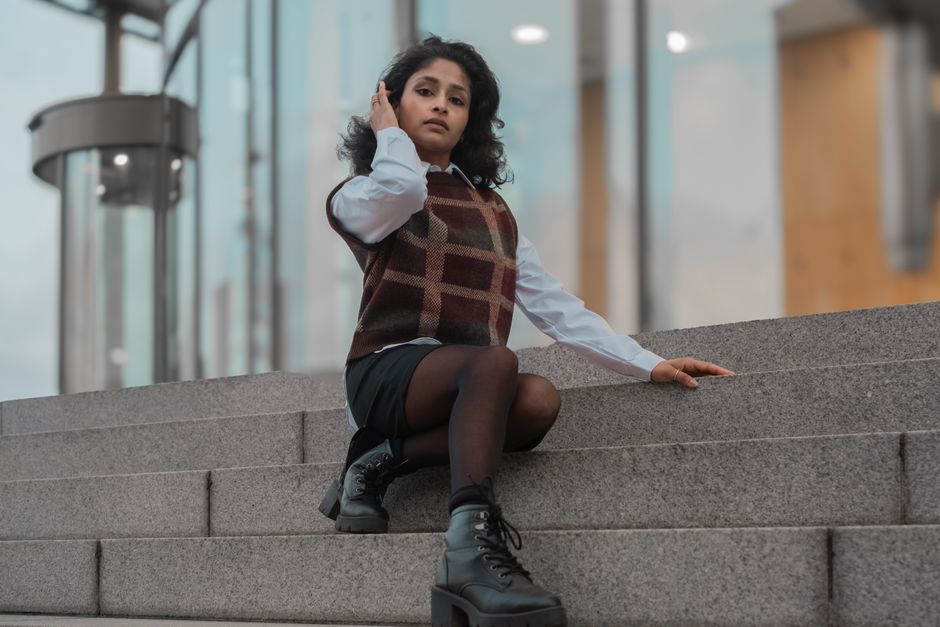
A sweater vest gives a shirt dress a fresh shape while keeping the ease that made you reach for the dress in the first place. The knit creates a clear upper layer, while the exposed sleeves and skirt keep the outfit feeling light. The most useful detail to consider is where the vest ends and the dress begins to open out. Once those lines work together, the rest becomes much simpler. Start with a dress you already enjoy wearing, then choose a vest that lets its fabric fall comfortably.
Start with the shape of your dress
Try the shirt dress on alone and notice how it hangs. A straight dress gives a vest a relatively smooth base. An A-line dress brings movement below the knit, while a gathered waist introduces more fabric exactly where a longer vest might press against it. Each can work, but the best vest length will depend on where that extra fullness begins.
Look at the details across the bodice, too. Chest pockets, a substantial button placket, and a tied fabric belt can create ridges underneath a close-fitting knit. If your dress has a removable belt, try taking it off before layering. Let any belt loops lie flat. You may find that the vest provides all the definition you wanted from the original belt.
Choose where the vest hem should land
The lower edge of the vest creates a noticeable horizontal line. Check what happens immediately beneath it: the skirt should fall freely, without a shelf of trapped fabric. There is no single flattering length for everyone. Your dress construction, the tension at the hem of the vest, and the outline you enjoy wearing matter more than a fixed rule about your height or age.
With a gathered or defined waist
A shorter vest that ends near the waist seam can let the skirt open naturally. Look for an edge that rests against the dress rather than gripping it. A tight ribbed band may draw the cotton upward and leave a puff of fabric above it. Raise your arms, then lower them. The layers should settle back without needing a careful rearrangement.
With a straight shirt dress
A hip-length vest can sit comfortably over a straight dress because there is less fullness underneath. Side slits in the knit may give the dress more room to move. Check the view from the side and back. If the vest catches behind you, try a more relaxed hem or a shorter length before assuming you need a larger size throughout.
Give the sleeves room to move
A vest needs enough space at its armholes for the dress sleeves underneath. When the openings are too snug, the fabric can gather under your arms and pull the knit upward across your chest. Reach forward as though holding a steering wheel. Notice whether the dress moves comfortably on its own and whether adding the vest changes that feeling.
Full sleeves usually work more easily with generous armholes and a simple vest shape. If both garments have dropped shoulders, you may get extra folds around the upper arms. A neatly set dress sleeve beneath a relaxed knit often creates a cleaner arrangement. Make sure the vest shoulders remain secure instead of slipping outward when you move.
Balance the weight of the fabrics
Crisp cotton gives the outfit structure, but it also makes pronounced creases beneath a tight sweater vest. A little breathing room allows the cotton to shift naturally. A softer, fluid shirt dress drapes more quietly, although a heavy knit can weigh down its upper half. Feel the two fabrics together and consider whether one seems to overwhelm the other.
A fine or medium knit is an approachable starting point. It adds texture without obscuring the dress. Cable knitting can look lovely over plain fabric, especially if the vest has a straightforward cut. If the dress already features checks, stripes, or a busy print, a smoother knit makes it easier to see the relationship between the two pieces.
Let the collar sit naturally
A V-neck vest leaves space for the shirt collar and some of the button placket. Arrange the collar outside the knit if it falls comfortably there, and check that its points lie flat. Leaving an upper button open can soften the neckline if you like that amount of coverage. Avoid pulling the dress into an opening wider than its cut comfortably allows.
With a crewneck vest, a small collar can sit neatly above the ribbing. A broad collar may buckle against a narrow opening. If you keep tugging it into place, try another neckline combination. A collarless shirt dress is also useful here: it lets the knit frame your face without several edges competing for space.
Build a clear color relationship
For an easy first pairing, repeat a color from the dress in the vest. A gray knit over a gray-striped shirt dress connects the layers while leaving the stripes visible at the sleeves and skirt. If the dress is patterned, consider one of its smaller colors. This can make the combination feel considered without requiring an exact match.
Similar tones offer a softer effect. Cream cotton with an oatmeal vest lets texture provide the interest. A dark vest over a pale dress creates a stronger upper shape, so look at the contrast along the vest hem as well as around your face. Keep the other colors simple while you decide whether you enjoy that sharper division.
Finish the outfit with everyday purpose
Loafers give a smooth vest and plain shirt dress a composed finish for lunch or a casual workplace. Ankle boots add substance beneath a longer skirt, while simple flats suit lighter fabrics. Put on your chosen shoes before judging the balance of the outfit. A substantial knit may feel more connected to footwear with a little visual weight.
Accessories can stay uncomplicated. Earrings, a watch, or a simple bag may be enough when the collar and knit already supply detail. If you want more waist definition, try a shorter vest before introducing a belt over both layers. A belt can work, but it should hold the fabric gently without creating a bulky fold above or below it.
Check the pairing in motion
Sit down, walk across the room, and take a full stride. Check that the button placket lies comfortably and the skirt moves freely below the knit. Smooth the dress once, then see whether it stays settled. An outfit that needs constant adjustment probably needs a different meeting point between the layers.
Change one thing at a time if something feels awkward. A looser vest hem may release trapped fabric; a shorter vest may free a gathered skirt. Once the layers move easily together, you have a useful outfit that brings warmth and texture to a familiar dress. Let comfort guide the final choice so you can get on with your day.