
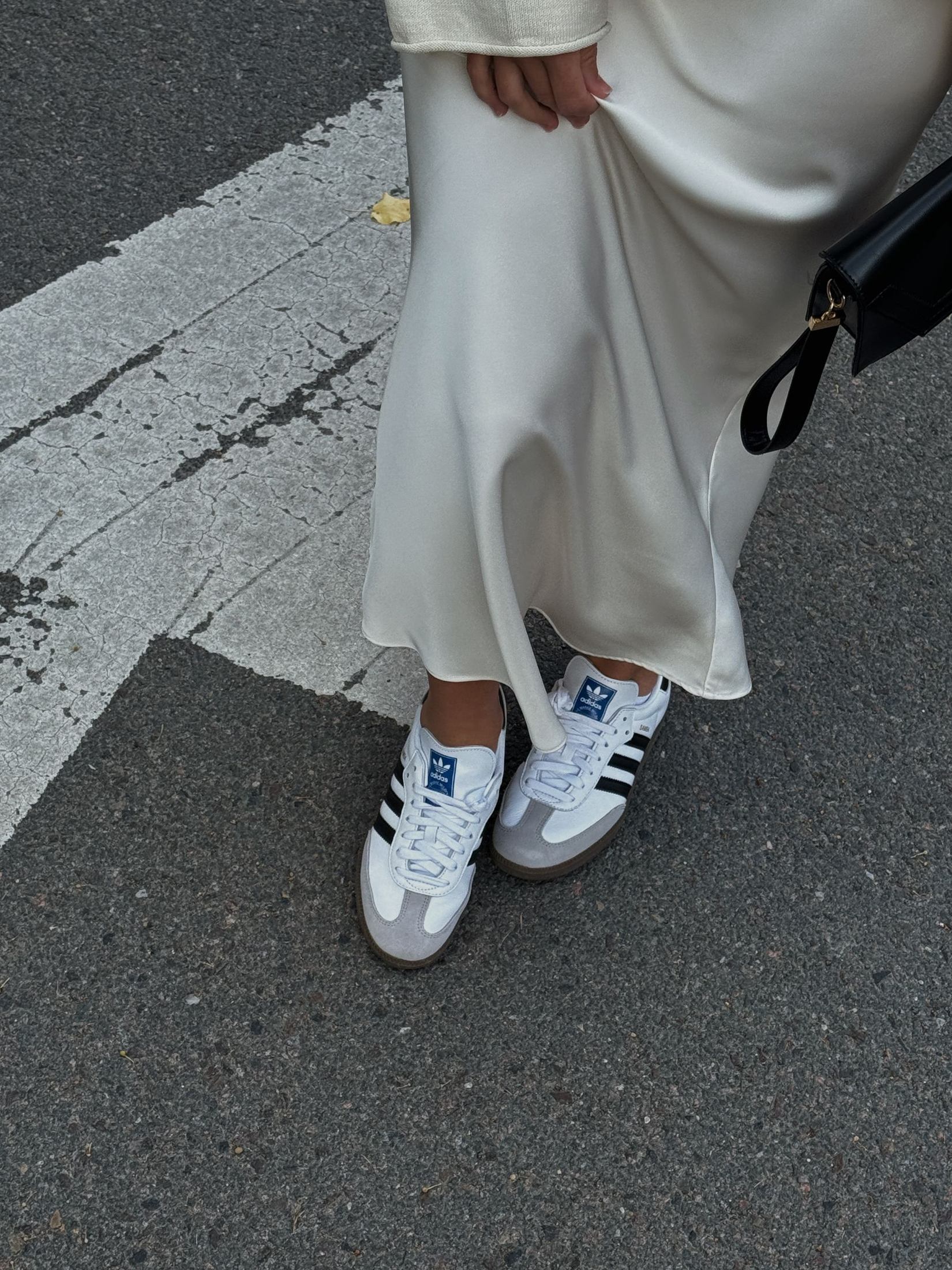
Sneakers and midi dresses work together when their shapes look like parts of the same outfit. That does not require a specific brand, a white shoe, or a particular body type. It means considering where the dress ends, how much volume it carries, and how much visual weight the sneaker adds underneath. Start with a dress you already enjoy wearing and compare shoes you own. Small adjustments to socks, a jacket, or a waist detail can change the result considerably.

1. Read the dress silhouette before choosing the shoe
Lay out the dress and identify its strongest feature. A straight jersey column creates a continuous vertical shape. A gathered cotton dress spreads outward from the waist. A bias-cut dress follows the body more closely, while a pleated skirt introduces repeated vertical lines. These differences matter more than the generic label midi.
Try a relatively slim sneaker with each shape first, then compare a more substantial pair if you have one. The slimmer shoe may keep a full skirt feeling light; the larger shoe may deliberately ground a fluid dress. Neither is the default winner. Ask whether the shoe supports the amount of volume above it or looks like an unrelated item attached at the bottom.
2. Look at the actual hem position
Midi covers a range of lengths, and the same dress can land differently on different people. Look at the gap between the hem and the shoe from the front and side. A hem that nearly touches a high shoe collar creates a more continuous block than one that leaves a clear break. Decide whether that is the effect you want rather than following a rule about showing a particular amount of ankle.
Walk and sit to check the hem in motion. A narrow dress that catches on a chunky tongue or a long skirt that brushes the shoe may need a different pairing. Before altering a dress, try a lower-profile sneaker. Changing the shoe is a reversible way to find out what is causing the visual or practical conflict.
3. Give sneaker details a role
A sneaker with a contrasting sole, bright logo, or multiple panels already contains several visual elements. With a busy floral dress, that can be lively, but it also increases competition. Pick one shoe detail to connect with the dress: a green panel can echo a leaf in the print, or an off-white sole can relate to a light background.
For a solid navy dress, a simple cream sneaker creates clear contrast. A multicolored sneaker can become the main accent instead, especially when the bag and jacket remain quiet. You do not need to repeat every shoe color elsewhere. One visible relationship is usually enough to make a complicated shoe feel considered rather than accidental.
4. Treat socks as part of the composition
If socks are visible, style them deliberately. A short plain sock close in color to the shoe makes the footwear read as one unit. A contrasting crew sock introduces a band between the hem and the sneaker. That band can be playful, particularly with a simple dress, but it changes the proportions and deserves a full-length mirror check.
Use the socks that fit comfortably inside the sneaker rather than choosing solely for appearance. A liner that repeatedly slips is not a useful foundation for the outfit. With a printed midi, try an unpatterned sock before adding stripes or decorative edges. If the lower half feels visually busy, simplify this small area before abandoning the dress-and-sneaker combination altogether.
5. Use the outer layer to connect the levels of formality
A fluid dress and athletic-looking sneaker can seem far apart until a casual outer layer gives them common ground. Try an open cotton shirt, a simple denim jacket, or a clean-lined casual jacket, depending on the dress. Check the fabric weights together: a very rigid jacket can overwhelm a delicate skirt, while a soft overshirt may continue its movement.
Jacket length changes where the outfit divides. A short layer can leave a defined dress waist visible; a longer open layer creates vertical edges. If a jacket ends directly at the fullest part of a gathered skirt, compare it open and closed. The goal is to preserve a readable silhouette, not to force every dress into an identical cropped-jacket formula.
6. Build three distinct outfit examples
For a relaxed daytime outfit, pair a blue cotton shirt dress with off-white low-tops and a canvas bag. Keep the sleeves and collar unfussy so the shoes belong to the same casual vocabulary. If the dress has a belt, compare it loosely tied with the belt removed where the garment allows; choose the version whose shape you prefer while moving.
For a more graphic outfit, try a black knit column midi with gray sneakers and a red lightweight jacket. For a softer combination, use a small-print midi, a plain sneaker, and an open cardigan with sleeves that stay clear of your hands. These examples use different routes to coherence: shared ease, deliberate contrast, and repeated softness.
7. Diagnose the one thing that feels wrong
When the outfit looks unfinished, change one variable at a time. If the bottom looks heavy, compare a less bulky shoe or quieter sock. If the dress seems too formal beside the sneakers, simplify the jewelry or add a casual layer. If everything blends into one shape, introduce a modest color contrast at the shoe or jacket rather than adding several accessories.
Finish with a practical check: the dress clears the shoes while you walk, the sneakers fit with your chosen socks, and the outer layer can be removed without leaving an outfit you dislike. A successful pairing should still make sense without careful posing. That is a more useful standard than copying an exact hem-to-shoe ratio from someone else’s photograph.