
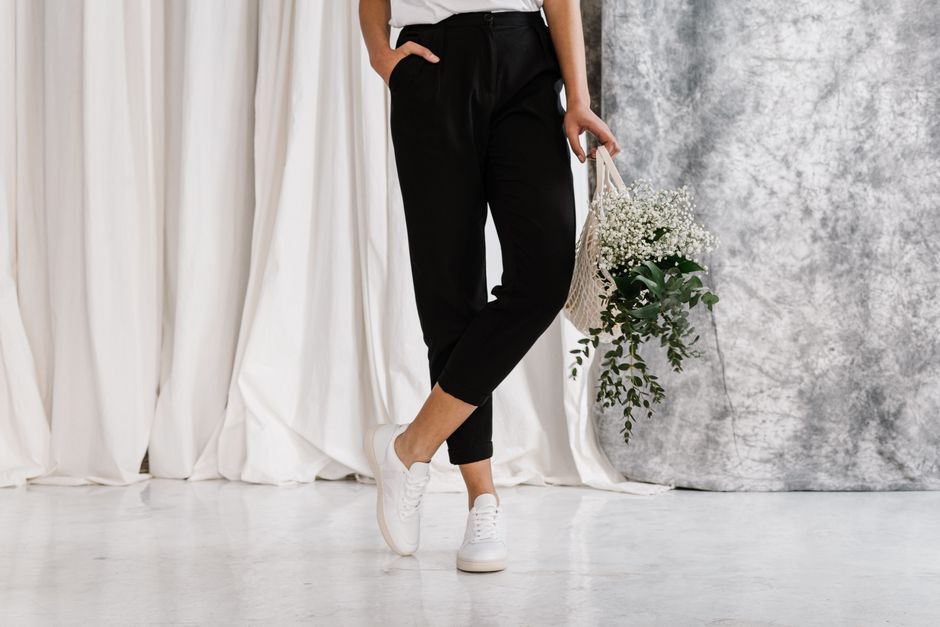
Summer trousers should feel easy before you have even decided what to wear with them. An elastic waist can help, but elastic on a label does not guarantee comfort. Some bands grip, some twist, and others seem comfortable until you sit down. The useful distinction is how the whole garment works: the waistband needs to support trousers that already have enough room through the hips and legs. Shop with that in mind, and you can find a pair that feels relaxed and looks entirely intentional.
Start with the waistband itself
Look inside the trousers before trying them on. A fabric-covered band should feel smooth against your skin, with no rough seam ends or stiff label caught underneath it. Run your fingers around the full circumference. Thick joins, hard patches, or elastic that already feels folded can become distracting during a warm afternoon.
Width is a useful clue, but softness matters just as much. A broader band may spread pressure comfortably, yet a stiff broad band can feel restrictive when you bend. A narrow band can work well if it is supple and does not dig in. Stretch it gently, then release it: the waistband should recover evenly rather than remain stretched or gather into uneven sections.
Choose where you want the elastic
- Elastic all around: offers flexibility across the entire waist, with gathers that may be visible at the front and sides.
- A flat front with an elastic back: gives a smoother front appearance while allowing some movement at the rear waist.
- Elastic with a working drawstring: allows adjustment, provided the trousers fit comfortably before the cord is tightened.
A decorative drawstring will not change the fit. If adjustment matters to you, check that the cord actually moves through the casing. Consider the knot, too: a bulky bow can press against your middle under a close-fitting top or while you lean against a counter.
Make sure the trousers fit beyond the waist
Elastic can disguise a poor fit while you are standing still. Because the waist stretches, it is tempting to accept trousers that pull elsewhere. Look for fabric that falls freely over your hips and seat, without horizontal strain lines or pockets that gape. The band should hold the garment in place without working against tight fabric below it.
For pull-on trousers without an opening, the waistband also needs to pass comfortably over your hips. If getting them on requires forceful tugging, try another size or a style with a fastening. Once they are on, you should not need to tighten a drawstring firmly just to keep an otherwise oversized pair from slipping.
Check the back as well as the front. Fabric caught beneath the seat, a waistband pulled downward, or side seams that swing forward can indicate that the cut does not give you room where you need it. Changing the silhouette may help more than moving up or down a size.
Give the gathering somewhere to go
The amount of fabric gathered into the waistband affects both comfort and appearance. A generous leg does not automatically mean a bulky waist; much depends on the fabric and how the fullness is distributed. Soft, fine gathers usually settle more easily than dense folds in a firm cloth.
If you prefer less volume around your middle, look for a relatively smooth front, with gathering concentrated at the sides or back. If you enjoy a softly gathered waist, check that the fabric drops downward rather than standing away from your body. Neither approach is more appropriate for a particular age. Choose the shape you like seeing and wearing.
Pay attention to pockets, too. Pocket bags can add another layer directly beneath the gathers. Slip your hand inside, then remove it and see whether the opening settles flat. A pocket that stays turned outward may become more noticeable once you carry something in it.
Assess summer fabric by touch and movement
Fabric names are a starting point, not a complete comfort guide. Cotton, linen, and fabrics containing viscose or lyocell can all appear in summer trousers, but weight, weave, finish, and lining change how each pair feels. Hold the leg loosely in your hand. Does it feel airy and supple, or dense and surprisingly heavy?
Consider the area beneath the elastic in particular. Even a light trouser leg can have a thick waistband made from folded cloth, elastic, seams, and a drawstring channel. If heat around your middle bothers you, a simpler construction may feel better than a heavily layered band.
Check whether a lining adds warmth or restricts the outer fabric. Then gently scrunch a small section and let it fall. This will not predict every crease, but it helps you decide whether you enjoy the relaxed character of the fabric. Choose a finish you can live with through an ordinary day, rather than expecting summer trousers to remain freshly pressed.
Try them as you will actually wear them
A fitting-room mirror shows only part of the story. Spend a few moments moving, with the waistband positioned where it naturally wants to rest. Avoid pulling it higher simply to improve the appearance of the leg; that may create tension elsewhere and give you a misleading impression of the fit.
- Sit normally. Let your abdomen relax and notice whether the upper edge presses or folds.
- Lean forward. Check that the back stays comfortably in place and the front does not bunch sharply.
- Walk and take a broad step. The legs should allow movement without dragging the waistband downward.
- Stand again. See whether the trousers settle by themselves or need repeated adjustment.
If your waist comfort changes during the day, allow for that when judging the fit. A band that feels just tolerable during a brief try-on offers little flexibility. You want gentle support while breathing and moving normally, without consciously holding your stomach in.
Check the details that help them look finished
Once comfort is right, assess the trousers with the kind of top you usually wear. An untucked top should fall smoothly over the band instead of catching on a prominent cord or thick gathers. If you prefer the waist visible, look for even stitching, tidy cord ends, and a casing that sits level.
Look down the legs for twisting seams and uneven drape. These details can make a comfortable pair feel less polished, regardless of the waistband style. Read the care label before deciding, too. Care that fits your routine makes it easier to keep both the cloth and elastic in good condition; avoid assuming that every summer fabric tolerates the same washing or drying method.
The right pair should let you stop thinking about the waist once you have put them on. Choose the band that feels kind against your body, the cut that moves freely, and the fabric you enjoy wearing in warm weather. That combination gives elastic-waist trousers their real appeal: everyday ease with a shape you are happy to leave the house in.