
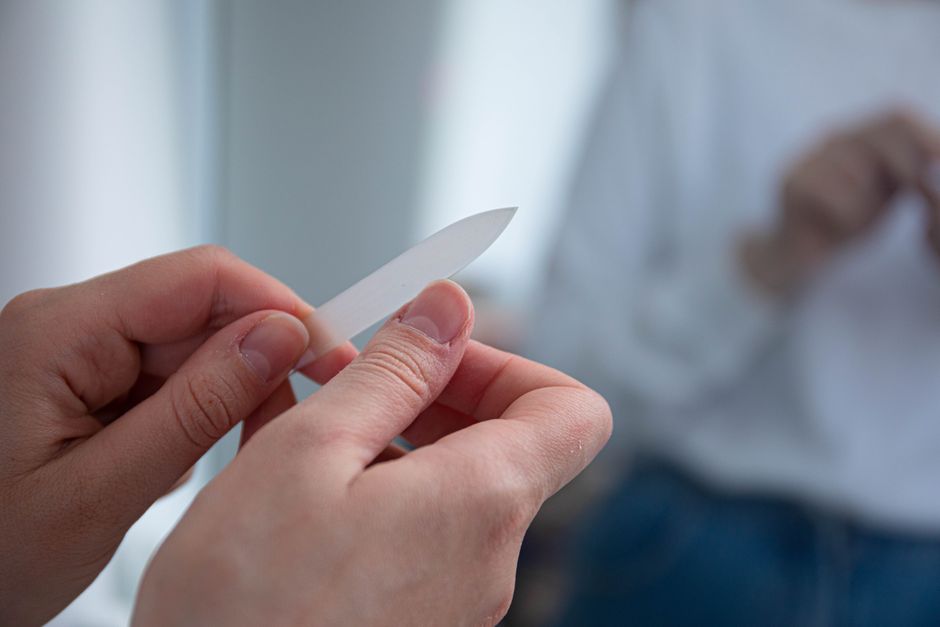
A nail file can look like the simplest thing in your beauty drawer, yet the wrong surface can make thin natural nails surprisingly difficult to tidy. A few strokes may remove more length than you intended, or leave an edge that still catches on clothing. Choosing a Nail File for Thin Natural Nails starts with a modest aim: finding a tool that lets you refine the edge with very little pressure. You do not need an elaborate manicure kit. You need a fine surface, a comfortable grip, and enough control to stop while the nail still feels smooth.
Choose for the nail you have today
Thin nails do not all behave alike. Yours might bend easily, develop small splits at the tips, or feel delicate after removing a manicure. Even nails on the same hand can need different amounts of attention. Before buying a file, consider what you actually need it to do: shorten a little, remove a tiny snag, or maintain an already comfortable length.
A file is a shaping tool, not a treatment for thinning. If your nails have become noticeably different, do not assume a more expensive file will solve the problem. Persistent splitting, pain, discoloration, lifting, or unexplained changes deserve a dermatologist’s advice. For everyday tidying, let gentleness and control guide your choice.
Start with the abrasive surface
Understand what grit tells you
On files that carry a grit rating, a higher number generally describes a finer abrasive surface. A lower number describes a coarser one that removes material more quickly. For thin natural nails, look for a fine file explicitly labeled for natural nails or gentle finishing. Avoid choosing a coarse file simply because it promises fast shaping.
Grit labels are useful, but they cannot tell you everything about how a file will feel. The backing, condition of the abrasive, and pressure you apply also matter. If a file has two different sides, identify the finer side before using it. An unmarked file from an old manicure set is less helpful when you cannot confidently judge its surface.
Do not confuse softness with fineness
A thick, spongy file can feel comfortable in your hand while still carrying a coarse abrasive. A rigid file can have a very fine working surface. Read the description of the abrasive rather than relying on how padded or flexible the tool looks. You are choosing the part that touches the nail, as well as the support behind it.
Compare the main file materials
Fine emery boards
A fine emery board is a straightforward option for occasional maintenance. Its slim shape makes it easy to see where you are working, and a little flexibility may feel comfortable. Choose one with an evenly attached abrasive surface and edges that are not peeling away. If the board folds under light use, you may find it harder to keep steady contact.
Emery boards need replacing when the abrasive becomes patchy or the backing starts to separate. A worn patch can tempt you to press harder to get a result. Unless the manufacturer specifically says the board is washable, keep it dry and replace it when dirty or damaged.
Glass files
A fine glass file can be a good fit if you prefer a firm tool and a reusable surface. Look for one intended for natural nails, with a smooth handle and clear care instructions. Some have an etched working surface; others use an applied abrasive. Check how the particular file should be cleaned and stored instead of assuming every glass file is made the same way.
Glass does not automatically mean gentle. The working texture still needs to suit delicate nails, and your pressure still matters. A protective case is useful because a glass file can chip or break if dropped. Do not use one with a damaged edge, even if most of the filing surface looks intact.
Metal files
Metal files vary considerably in texture. Some have a fine abrasive, while others have pronounced grooves that feel too aggressive for a delicate edge. If you cannot assess the surface before buying, a clearly labeled fine natural-nail file is an easier starting point than a traditional grooved metal tool. Avoid using any pointed tip to dig beneath the nail.
Find a shape your hands can control
The best material will still be frustrating if the file slips or feels awkward. Look for enough handle space to hold it securely without covering the working area. A moderate length can be easier to guide than a tiny travel file, especially if your fingers feel stiff or you prefer a relaxed grip.
Check the profile, too. A very thick file may be awkward beneath a short free edge. A broad paddle can obscure your view when you only want to touch a small snag. You should be able to see the contact point and move the tool without pressing into the surrounding skin.
- For small snags: choose a fine surface with a narrow enough profile to reach the edge comfortably.
- For regular upkeep: prioritize a stable backing and a handle you can hold lightly.
- For a handbag: use a protective sleeve or case to keep the abrasive from rubbing against other items.
- For easier handling: consider a larger grip rather than accepting a slippery miniature tool.
Let a few light strokes guide you
Use your chosen file on clean, dry nails, rather than immediately after a long soak when they may feel softer. Rest your hand on a steady surface and begin with one small section of the free edge. Make a few light strokes in one direction, then pause to inspect the result. This keeps the process easy to monitor.
A suitable file should remove a little material without requiring force. If the nail bends markedly, the tool skips, or you feel uncomfortable vibration, stop and reassess your pressure and the surface. Do not keep working in the hope that extra strokes will make a rough file feel gentler.
Keep filing to the free edge. Thin nails do not need their upper surfaces filed to make them look more even, and a shaping file should not double as a ridge remover. If you notice a peeling layer, resist chasing it farther down the nail with the abrasive. Stop rather than thinning the area further.
Make replacement part of your choice
Before settling on a file, consider whether its care fits your habits. Follow the manufacturer’s cleaning instructions, allow washable tools to dry fully, and keep your file for personal use. Store it somewhere clean and protected. Replace disposable boards when worn, and retire reusable files if they become damaged.
Once the edge feels comfortable, put the file away. Repeatedly checking and refining can turn a tiny adjustment into more removal than you planned. A well-chosen file earns its place by making maintenance uneventful: a secure hold, a light touch, and a smooth stopping point that lets you get on with your day.